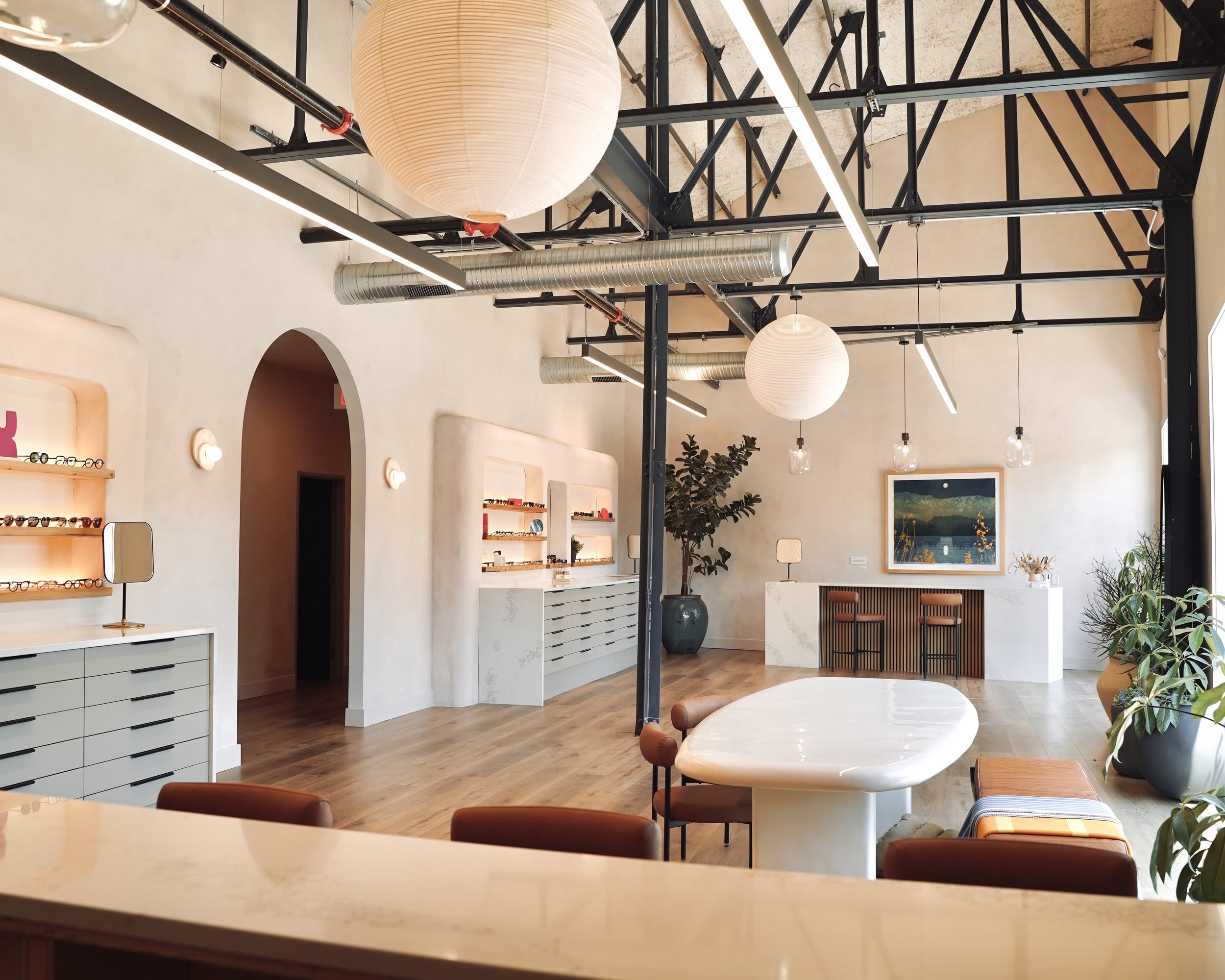
I worked at a chain optical for three years before opening my own practice. I know exactly how chain stores work — the quotas, the upselling scripts, the lens packages designed to maximize margin rather than serve the customer. I left because I wanted to do something different. Twenty-three years later, I am still doing it differently.
Here is the fundamental problem with buying luxury eyewear at a chain store: the business model is incompatible with the product. Chain optical stores are built on volume — they need to move a certain number of frames per day to justify their real estate, their staff, and their corporate overhead. That pressure shapes everything: how long they spend with each customer, which frames they push, how they handle complaints. Volume and luxury are not enemies, but they are in constant tension.
Independent opticians operate differently. We carry fewer frames, but we know every one of them. When a customer asks me about the difference between Lindberg's Air Titanium Rim and their Strip Titanium, I can answer from experience — I have fitted hundreds of both. When someone comes in with a high astigmatic prescription and wants a MYKITA frame, I know which models will work optically and which will create problems. That knowledge comes from years of working with the brands, attending their training sessions, and fitting their frames on real faces.
The fitting itself is different. At a chain store, a fitting takes ten minutes. At an independent boutique, it takes as long as it needs to. I measure pupillary distance. I assess face shape and skin tone. I consider the customer's lifestyle — do they spend time outdoors? Are they in front of screens all day? Do they need a frame that transitions between professional and casual settings? These are not questions that get asked in a ten-minute chain store visit.
For prescription lenses, the difference is even more pronounced. Chain stores typically use in-house labs with limited lens options. Independent opticians have relationships with multiple premium labs and can source lenses from Zeiss, Essilor, Rodenstock, or Hoya depending on what the prescription requires. For progressive lenses — the most technically demanding lens type — this flexibility is the difference between a pair of glasses that works beautifully and one that takes months of adaptation.
The brands themselves know this. Lindberg, MYKITA, Garrett Leight, and Face à Face do not sell through chain stores. They sell exclusively through independent boutiques and their own retail locations. This is not snobbery — it is a recognition that their products require the kind of knowledge, time, and personal attention that only an independent optician can provide. When you buy from The Last Optical, you are buying from the kind of retailer these brands were designed to be sold through.